Exercise for a bad back
Gentle, low-impact ways to stay active with back pain: walking, swimming, Pilates, yoga and more, with what to avoid and when to see a doctor.

Free exercise guide: 244 ways to get active
A free UK exercise guide with 244 ways to get active, from a ten-minute walk to marathon training. Choose your age, your fitness level and your spare time, and we will suggest the best exercise to start with.
Exercise Explorer is a free guide to 244 types of exercise, from walking, swimming, cycling and yoga to strength training, dance and tai chi. Whether you want to get fit at home, build strength, protect your joints or simply feel better, you can compare exercises by age, cost, spare time and how motivated you feel, and find a routine you will actually stick to. Every exercise has a plain-English guide to how to start, how to progress, a 12-week plan where we have one, and the cautions worth knowing. Not sure where to begin? Try our guides to exercise for over 60s, exercise for bad knees, exercise for a bad back or exercise for better sleep, or browse every category.
How it works
Answer a few quick questions and we will narrow 244 ways to exercise down to the few that suit you.
Choose your age and how fit you are now, and your best matches will appear here.
Every regime has a simple way to start, how to progress, a 12-week plan where we have one, and cautions.
Categories
Guides
Practical help for getting active when something gets in the way.
All guidesHealth & injuriesAge & life stageStarting outGoalsShort on timeHome & budgetCompare
Gentle, low-impact ways to stay active with back pain: walking, swimming, Pilates, yoga and more, with what to avoid and when to see a doctor.
Low-impact exercise for arthritis: water exercise, walking, cycling, tai chi and strengthening, with what to go slowly with and when to see a doctor.
The best exercise for weight loss: what reviews of trials show, which activities to choose, why strength work and consistency matter, and honest limits.
The best exercise for over 60s: walking, strength, balance and low-impact options, how much to do, and when to check with a doctor.
Short on time? Ten-minute workouts that fit into a busy day: walks, bodyweight circuits, intervals and strength, and what the research says.
Get fit at home with no kit: bodyweight strength, walking, mobility and short circuits, with what the research says and how to start.
Can exercise help you sleep? What a review of 22 trials found, which activities to try, and when to see a doctor about sleep problems.
Never exercised? Easy ways to start: walking, short bursts, light strength work and simple routines, with how much to do and how to stick with it.
Knee-friendly exercise: water workouts, cycling, walking and strengthening, with what to avoid and when to see a doctor about knee pain.
Which exercise helps lower blood pressure: walking, cycling, swimming, yoga and strength work, with safety tips and when to see a doctor.
Which exercise helps with stress and anxiety? Walking, yoga, tai chi, swimming and more, with what the research shows and when to seek help.
Low-impact exercise that is easy on the joints: walking, swimming, cycling, water workouts, tai chi and strength, with how to start.
The basics
The UK Chief Medical Officers' physical activity guidelines are a good starting point. They are general targets, and every bit of activity counts, so do not be put off if you are starting from a low base.
150 minutes of moderate activity a week
150 minutes a week, where you can
60 minutes a day on average
Check with your midwife or GP first
What counts as moderate? You are breathing faster and feel warmer, but you can still hold a conversation. Vigorous means you can only say a few words at a time. If you are new to exercise, or have a health condition, start with short sessions and build up slowly. These are general guides, not medical advice.
Understand your options
A balanced routine includes a little of each. Most exercises lean towards one or two of these, which is why a mix usually serves you best.
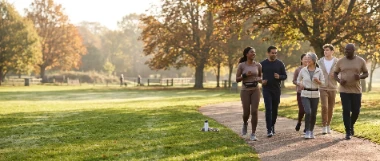
Raises your heart rate and breathing, and builds the stamina that helps with heart health, energy and everyday life. Examples include brisk walking, running, cycling, swimming and dance.
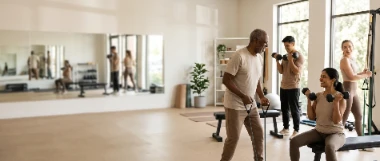
Works your muscles against resistance. It supports your bones and joints, makes daily tasks easier and helps you stay independent as you age. Examples include bodyweight exercises, resistance bands and weights.
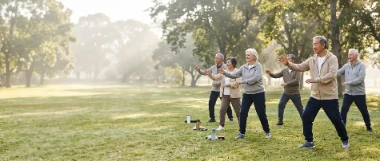
Trains your coordination and stability, which helps prevent falls. It matters at any age and becomes especially valuable from your sixties. Examples include tai chi, yoga and simple standing balance exercises.
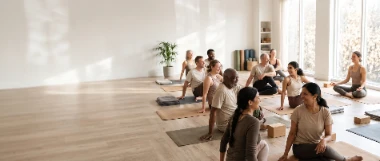
Keeps your joints moving through their full range and can ease stiffness. Examples include stretching, yoga and Pilates. It works best as a regular habit rather than a one-off session.
By age
What suits you changes over the years. These are general starting points, and the Find tool above narrows them down to your own age and fitness.
Your body usually recovers quickly, so this is a good time to try plenty of things and find what you enjoy. Team and racket sports, running, dance and strength training all work well, and building strong habits now pays off for decades.
Busy lives squeeze out exercise, so short, flexible sessions matter. Quick home workouts, brisk walking, cycling to work and two strength sessions a week fit around work and family.
Strength and bone health become more important, and so does keeping your joints comfortable. Walking, swimming, cycling, yoga and resistance training are all sensible, with balance work added in.
Staying active helps you keep your strength, balance and independence. Gentle walking, chair-based exercise, tai chi, water exercise and simple strength and balance routines are good places to begin.
Questions and answers
Walking is the best place to start for most people. It is free, low impact and easy to build up, from ten minutes a day to a brisk half hour. Swimming, cycling, water exercise and chair-based exercise are also gentle ways to begin. Start with short sessions, stay at a pace where you can still talk, and add a little time each week. Exercise for complete beginners
Swimming, water aerobics, cycling, walking and chair-based exercise are all low impact, which means they put less strain on your joints than running or jumping. Yoga, Pilates and tai chi are gentle options too. Low impact does not mean low effort: you can still raise your heart rate and get stronger. Low-impact exercise guide
There is no single best exercise. The one that works is the one you can keep doing week after week. Brisk walking, cycling, swimming, dance and interval training all use energy, and strength training helps you keep muscle. Exercise works best alongside sensible eating, and building up gradually helps you avoid injury and burnout. Best exercise for weight loss
Higher-intensity, whole-body activities such as running, fast cycling, swimming laps, rowing and interval training use the most energy in the time. How many calories you burn also depends on your weight, fitness and effort, so any figure is only a rough guide. A gentler activity you do regularly can matter more than a hard one you give up. Compare all exercise categories
A mix works best: regular walking or other gentle aerobic exercise, some muscle-strengthening on two days a week, and balance work such as tai chi, yoga or simple balance exercises. Swimming and cycling are kind to the joints. Start where you are and build up slowly. Exercise for over-60s
Start well below where you left off. Begin with short, easy sessions such as a ten-minute walk, add a few minutes each week, and keep rest days in between. Aches that fade within a day or two are normal. Sharp pain, dizziness or chest discomfort are not, so stop and get medical advice. Getting fit after a long break
The UK guidelines suggest about 150 minutes of moderate activity a week for adults, which works out at around 30 minutes on five days. Shorter bouts count too, so three ten-minute walks add up. If you are starting from nothing, ten minutes a day is a perfectly good beginning. 10-minute workouts
Yes. Walking, stair climbing, bodyweight exercises such as squats and push-ups, dancing, yoga and stretching all need little or no equipment. A pair of resistance bands or dumbbells can add variety later. No-equipment home workouts
Many health conditions improve with the right kind of activity, but the right kind depends on you. If you have a long-term condition, are pregnant, or have been inactive for a long time, talk to your GP, nurse or physiotherapist before you start. Our guides cover common conditions such as back pain, arthritis, high blood pressure and diabetes, with cautions to know. Browse the get-fit guides
No. There are no accounts. The age, fitness level and preferences you choose, and anything you record in the progress log, are saved only in your own web browser on your own device. We do not receive them. Analytics cookies are optional and only set if you accept them, and they never include your profile or progress log.
Not medical advice. This site gives general information only. Speak to a GP or physiotherapist before starting a new regime if you have a health condition, are pregnant, or have been inactive for a long time.